Hair Loss

Alopecia Hair Fixing Hair Loss

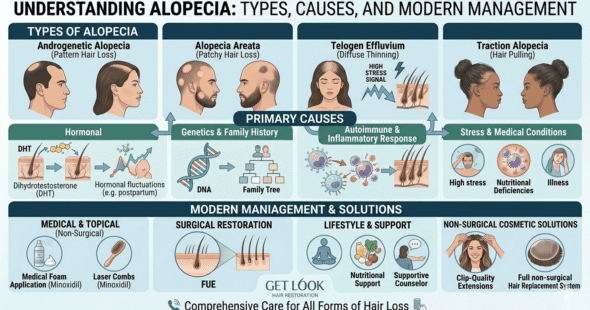
Understanding what is Alopecia: Types, Causes, and Modern Management

Alopecia is the medical term for hair loss, a condition that impacts millions of individuals globally. While often misunderstood as a simple cosmetic issue, alopecia is a complex clinical condition with various classifications, each requiring a tailored approach. Whether it presents as localized thinning or complete hair loss, the emotional impact is significant, making it vital to understand the condition and the modern restoration options available.

Female Hair Loss Hair Extensions Hair Fixing Hair Loss

Clip-on Hair Extensions: The Easiest Way to Add Instant Volume

Clip-on hair extensions are the ultimate accessory for anyone who wants a “volume boost” on their own terms. Unlike permanent systems that require professional bonding, clip-on extensions feature small, discreet clips that allow you to attach and remove them whenever you like. They are the perfect, low-commitment solution for achieving glamorous hair in seconds.

Hair Fixing Hair Loss

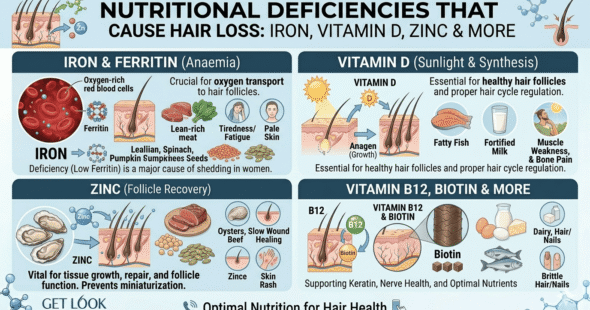
Nutritional Deficiencies That Cause Hair Loss: Iron, Vitamin D, Zinc & More

Your hair is a nutritional barometer. When the body is short of key nutrients, it diverts resources away from “non-essential” functions like hair growth first. Understanding which deficiencies matter — and which don’t — can save you a fortune on useless supplements.

Hair Fixing Hair Loss

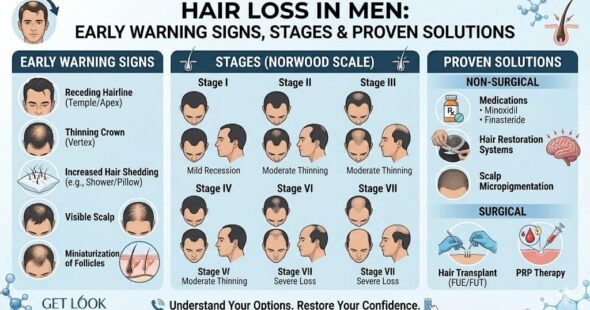
Hair Loss in Men: Early Warning Signs, Stages & Proven Solutions

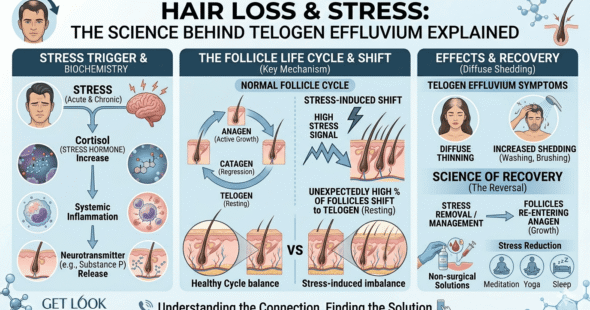
Every strand of hair goes through a three-stage lifecycle: anagen (active growth, lasting 2–7 years), catagen (transition, 2–3 weeks), and telogen (resting phase, 3 months). At the end of telogen, the hair sheds naturally and a new strand begins.

The average scalp has around 100,000 hair follicles. Losing 50–100 hairs a day is completely normal. The problem starts when the shedding rate dramatically outpaces new growth — or when follicles permanently shrink and stop producing hair altogether.

Hair Fixing Hair Loss

What Causes Hair Loss? The Complete Guide to Understanding Why Hair Falls Out

Every strand of hair goes through a three-stage lifecycle: anagen (active growth, lasting 2–7 years), catagen (transition, 2–3 weeks), and telogen (resting phase, 3 months). At the end of telogen, the hair sheds naturally and a new strand begins.

The average scalp has around 100,000 hair follicles. Losing 50–100 hairs a day is completely normal. The problem starts when the shedding rate dramatically outpaces new growth — or when follicles permanently shrink and stop producing hair altogether.

Hair Fixing Hair Loss

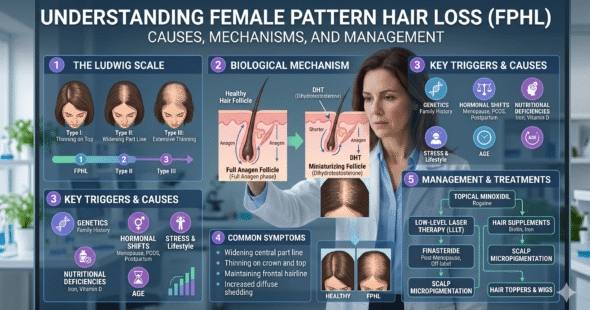
Hair-loss Explained: Root Causes, Symptoms, and Effective Non-Surgical Solutions

For many, the first realization of hair loss comes during daily grooming—noticing more hair in the shower drain or a visible widening of the part. Recognizing these early signs is critical. While medical treatments like Minoxidil or Finasteride exist to potentially slow further loss, they are often slow to act and rarely reverse significant thinning.