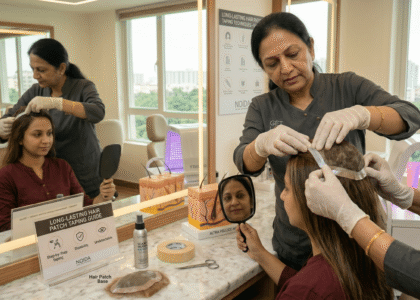
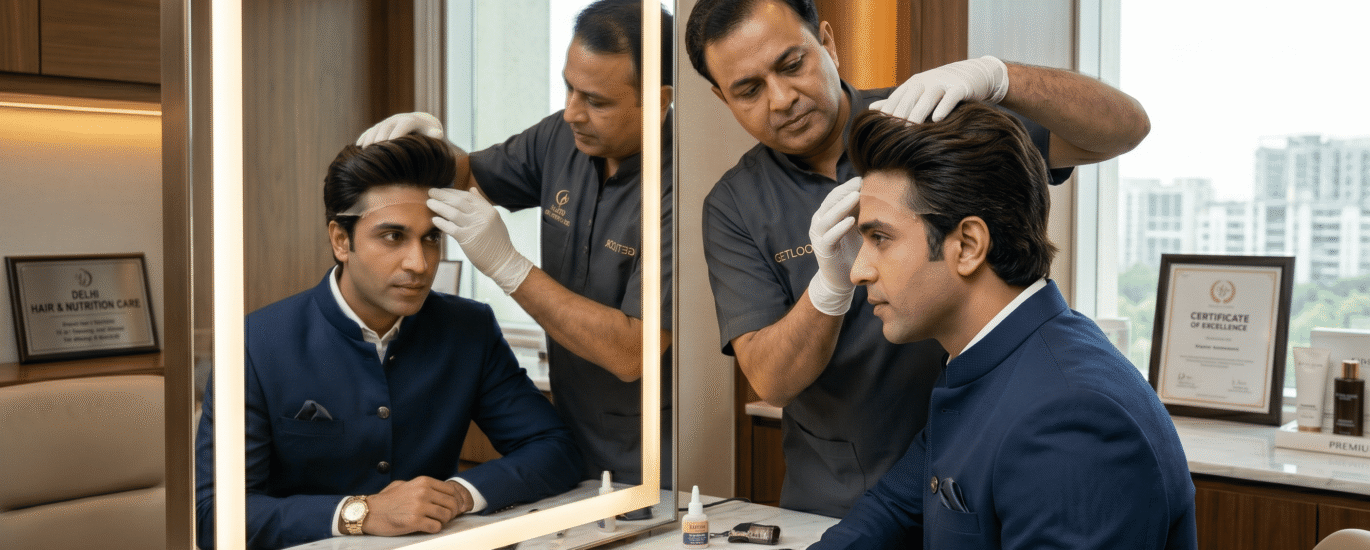
Alopecia totalis is an autoimmune condition that leads to the complete loss of hair on the scalp. For those living with this condition, the loss is not just about hair; it is about the sudden change in how one interacts with the world. Modern full-scalp alopecia totalis restoration is not just an aesthetic repair—it is a functional restoration of normalcy, comfort, and confidence.
Designing for Comfort and Realism | Alopecia Totalis Restoration
A full-scalp system for alopecia totalis must prioritize both comfort and a natural hairline. Because there is no existing hair to anchor to, the base material is crucial. We use ultra-thin, medical-grade membranes that sit securely against the scalp, providing a second-skin feel that is breathable and lightweight. The front hairline is hand-knotted, hair-by-hair, to simulate the way hair naturally sprouts from the skin, creating an invisible transition that even the closest observer will find realistic.
A Secure Lifestyle Solution | Alopecia Totalis Restoration
These systems are held in place with professional, hypoallergenic bonding adhesives that are specifically tested for all-day security. You can engage in any activity—sports, professional work, or casual social outings—with the full confidence that your hair system is perfectly secure. Our clinic provides a completely private experience, ensuring that your transition to restored hair is handled with the discretion and care it deserves.
FAQ's - Alopecia Totalis Restoration
No, modern units are incredibly lightweight and specifically engineered to feel like natural hair.
Yes, your full-scalp system can be cut and styled exactly like natural hair.
GET IN TOUCH
Any Queries? Contact Us Now.
Location Address:
Shop no 9, Wave Silver Tower, D Block, Pocket D, Sector 18, Noida, Uttar Pradesh 201301
Whatsapp Us:
+91-99514-90001
Email Address:
getlookhairfixingclinic @gmail.com
Opening Hours
10:00 AM to 8:00 PM
All Days Open
Medical Disclaimer: This article is for informational purposes only and does not constitute medical advice. Always consult a qualified dermatologist or trichologist for diagnosis and treatment.