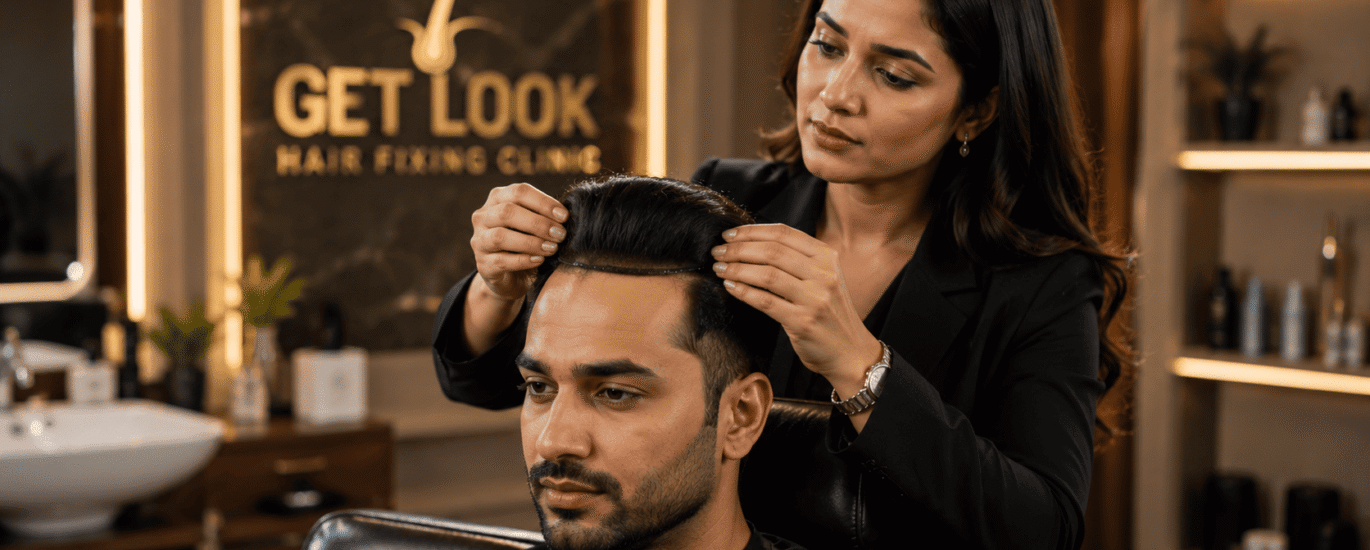
Hair Taping in Noida Sector 18
Hair Taping: The Invisible, Reversible Secret to Achieving Instant, Fuller Hair
The modern search for lush, full hair has become a defining journey for millions of men and women globally. Hair loss, whether driven by genetics, stress, hormonal shifts, or simple aging, is a deeply personal and often challenging experience. The emotional weight of losing a core component of one’s visual identity cannot be overstated. This universal struggle has spawned a multi-billion-dollar industry dedicated to non-surgical and surgical interventions.
While hair transplants offer a permanent solution, they come with significant costs, surgical recovery times, and are not viable for everyone. Topical treatments require lifelong dedication and often produce subtle results. This is where the innovative, rapidly evolving technique of Hair Taping steps in.
Hair Taping is redefining the intermediate landscape of non-surgical hair restoration. Offering an instant, customizable, and completely reversible transformation, it provides the psychological boost that topical lotions cannot, without the medical risks of surgery. It is a bridge solution that allows individuals to regain control over their appearance immediately.
Let us explore the nuance of Hair Taping: what it is, the science behind it, the precision of the process, and why it is becoming the chosen path for a new generation of hair solutions
Demystifying Hair Taping: What Exactly Is It?
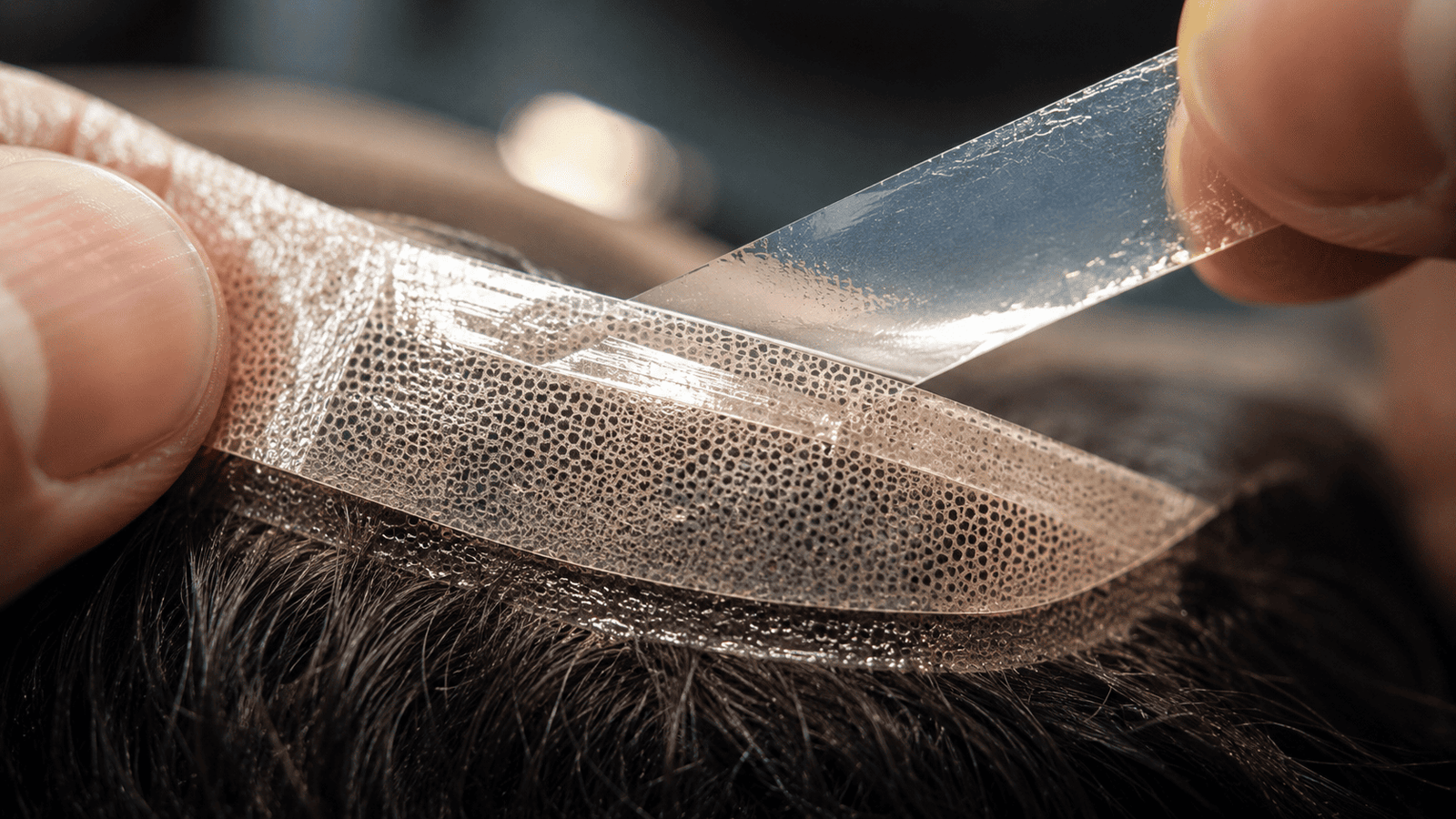
Hair Taping is a specific, precision-driven application technique for high-end, semi-permanent hair systems (often referred to as ‘hair patches,’ ‘units,’ or ‘non-surgical hair replacements’). Unlike traditional methods that rely on extensive weaving, bonding glue, or harsh chemical fusion, Hair Taping uses medical-grade, hypoallergenic adhesive tapes to secure the restoration unit to the scalp.
The distinguishing factor is the attachment mechanism. This isn’t your average household tape; it is a bio-compatible bonding agent applied in precision-cut strips to the base of the hair system. The system, often constructed on an ultra-fine base like delicate lace or thin poly skin, is then meticulously pressed and bonded to a prepared, clean scalp area.
The result is an incredibly strong, yet flexible, anchor. The tape creates a close, seamless contact that makes the transition between natural skin and the hair unit practically undetectable to the naked eye. This non-invasive attachment allows for complete lifestyle freedom, from intense exercise and showering to swimming.
It is crucial to distinguish Hair Taping from older concepts of “toupees.” The modern taped hair system is lightweight, highly breathable, and features meticulously matched hair density, texture, and color. It is a refined, natural-looking prosthetic designed for daily, confident wear.
The Science of the Hold: How Hair Taping Works
The efficacy of Hair Taping lies in advanced polymer adhesive technology. These adhesives must achieve a delicate balance: providing extreme bonding strength while maintaining scalp safety and breathability
Medical-Grade Adhesive Tapes
The tapes used in Hair Taping are generally dual-sided. One side is designed to adhere powerfully to the specific base material of the hair unit (such as polyurethane skin or mesh lace). The other side features a skin-safe acrylic or silicone-based adhesive that creates a strong molecular bond with the top layer of the epidermis (the stratum corneum).
These adhesives are engineered to resist degradation from sweat (hydration/salinity) and natural scalp sebum (oils). They are typically categorized by their hold time, ranging from a few days to dynamic extended wears lasting up to four weeks.
Base Materials for Seamless Integration
The science extends to the base of the hair unit itself:
Lace Bases (Monofilament or Swiss Lace)
These are constructed from very fine mesh. Hair is individually knotted into the lace. Taping works by adhering to reinforced poly perimeters or sometimes directly onto the mesh itself using specific types of tape (like Supertape or Walker Tape). These are extremely breathable and ideal for active lifestyles.
Skin Bases (Polyurethane)
These bases are ultra-thin membranes designed to mimic a micro-layer of skin. Tapes adhere aggressively and evenly to the entire poly base. This creates the tightest possible fit and an exceptionally natural front hairline, though they are less breathable than lace.
Scalp Preparation is Critical
The key to a long-lasting taped bond is not the tape itself, but the preparation of the canvas (the scalp). Before application, the scalp must be carefully shaved in the bonding area (if necessary) and thoroughly cleansed with professional-grade citrus cleaners or alcohol. Most importantly, a specialized scalp protector must be applied. This creates a fine barrier that optimizes adhesive contact, blocks natural oils, and minimizes the risk of skin irritation.
Step-by-Step: The Hair Taping Process Unveiled
A professional Hair Taping session is a blend of artistry and precision engineering. While some users eventually master self-application for short-term holds, initial application, custom fitting, and maintenance are best managed by specialized technicians.
Here is the typical process workflow in a luxury professional clinic:
Step 1: The Detailed Consultation & Evaluation
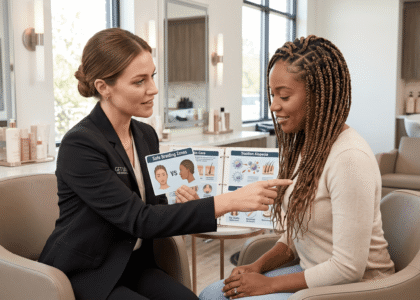
Every journey begins with a private evaluation. A specialist (often a female consultant or male technician) will assess the degree of hair loss, the remaining hair texture/color, and crucially, the user's lifestyle and expectation. The goal is to select the perfect base material (lace vs. poly) and the ideal adhesive tape strength.
Step 2: Scalp Prep and Shaving
If the user has significant thinning in the target zone (e.g., the crown), the existing hair in this precise area must be shaved. This is essential, as the tape is designed for direct skin contact, not hair-to-hair bonding. The area is then meticulously cleaned and the scalp protector is applied
Step 3: Precise Tape Placement and Fitting
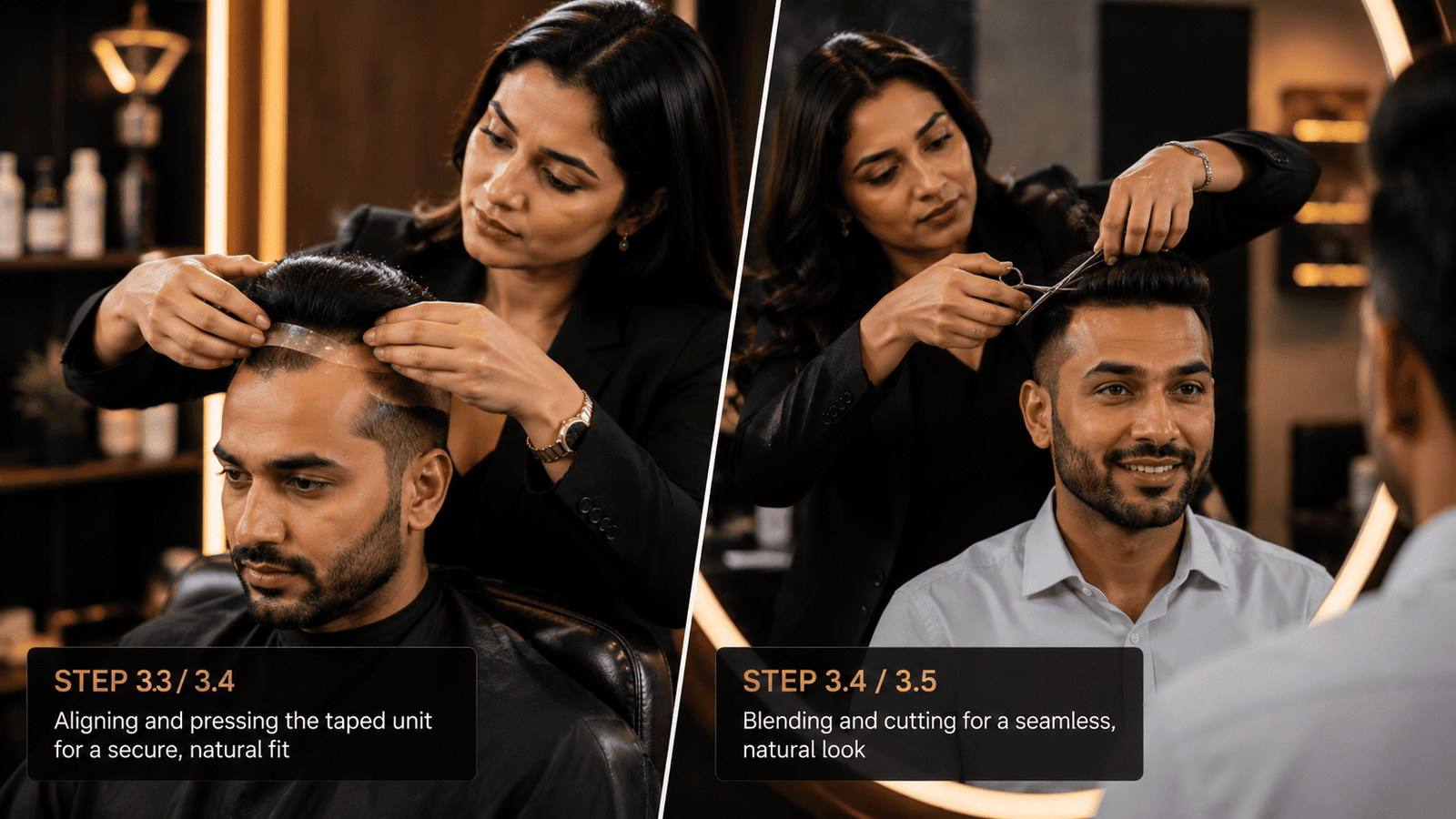
The technician applies precision-cut strips or pre-formed curves of the chosen adhesive tape to the perimeter or the center of the pre-fabricated hair unit's base. The hair system is then positioned with extreme care onto the scalp, aligning the hairline and ensuring symmetric placement. The unit is firmly pressed in stages to activate the pressure-sensitive adhesive bond.
Step 4: The Stylist's Finish: Blending the Cut
The transformation is cemented during the "cut-in." A professional hair stylist treats the newly applied system exactly like natural growing hair. They will cut, blend, and style the new hair system to flawlessly integrate with the user's existing side hair and back hair. This creates a cohesive, natural, and customized look.
Step 5: Maintenance and Re-Taping Cycle
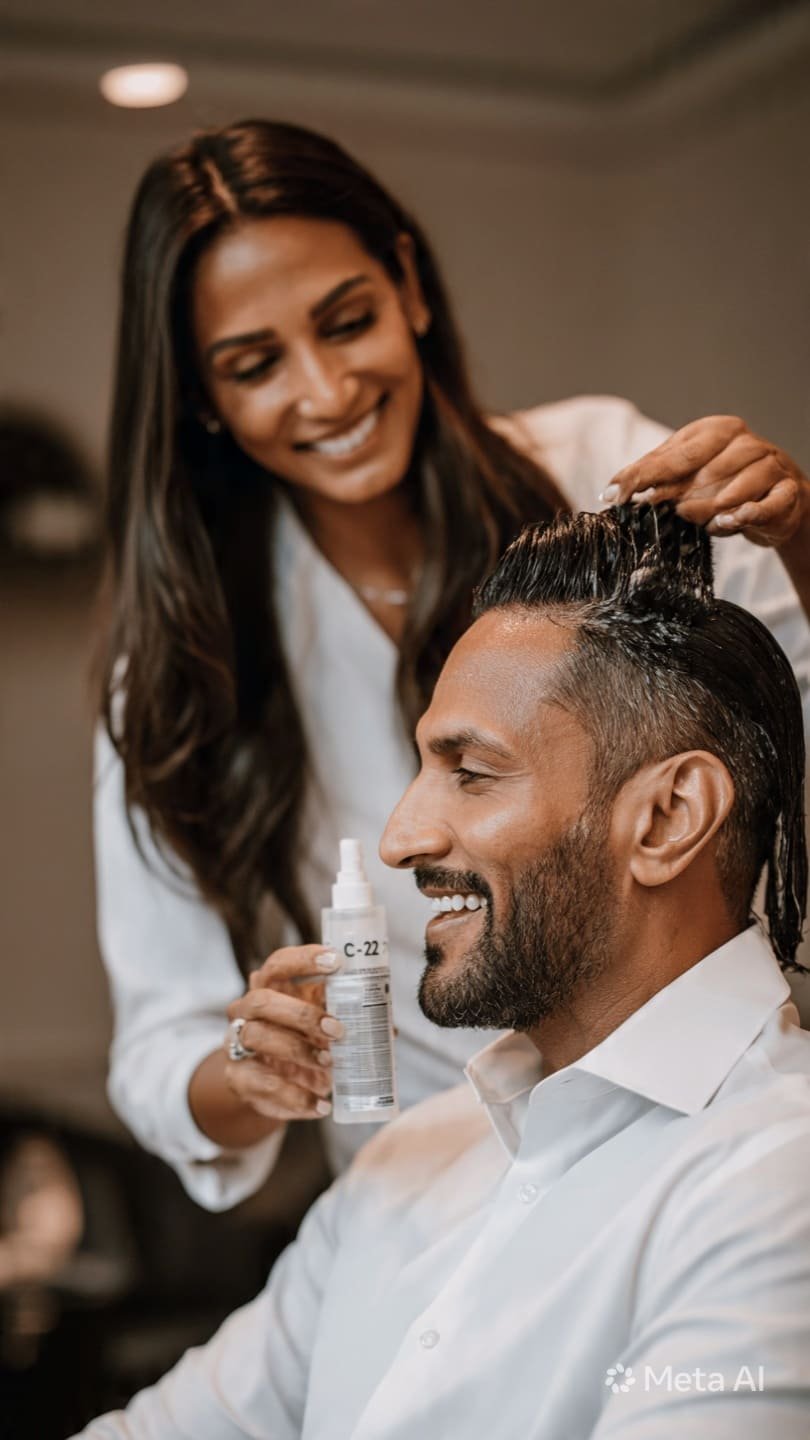
The bond of the tape will eventually degrade due to natural scalp oil production and environment factors. Maintenance is required roughly every 2 to 4 weeks. This cycle, called the "re-taping," involves returning to the clinic for a technician to remove the unit using medical-grade adhesive solvent (like C-22 or 99% alcohol), deep-cleaning the scalp, cleaning and re-taping the unit, and performing a re-application and styling refresh.
Weighing the Benefits: Why Hair Taping is the Non-Surgical Choice
Hair Taping has surged in popularity because it solves several key problems associated with other hair loss solutions.

1. Immediate and Dramatic Results
Unlike surgical transplants (which take 9-12 months to show results) or topical treatments (which might never yield significant density), Hair Taping offers an instant visual transformation. You walk in with thinning hair and walk out 60 minutes later with a full, thick, natural-looking head of hair. The emotional relief and immediate confidence boost are profound.
2. Completely Non-Surgical and Safe
This is perhaps the most significant benefit for those apprehensive about medical procedures. There is no surgery, no anesthesia, no scarring, and zero recovery time. Hair Taping is a completely external, non-invasive method. Modern adhesives are medical-grade, hypoallergenic, and generally well-tolerated by the skin.
3. Natural Appearance and Stealth
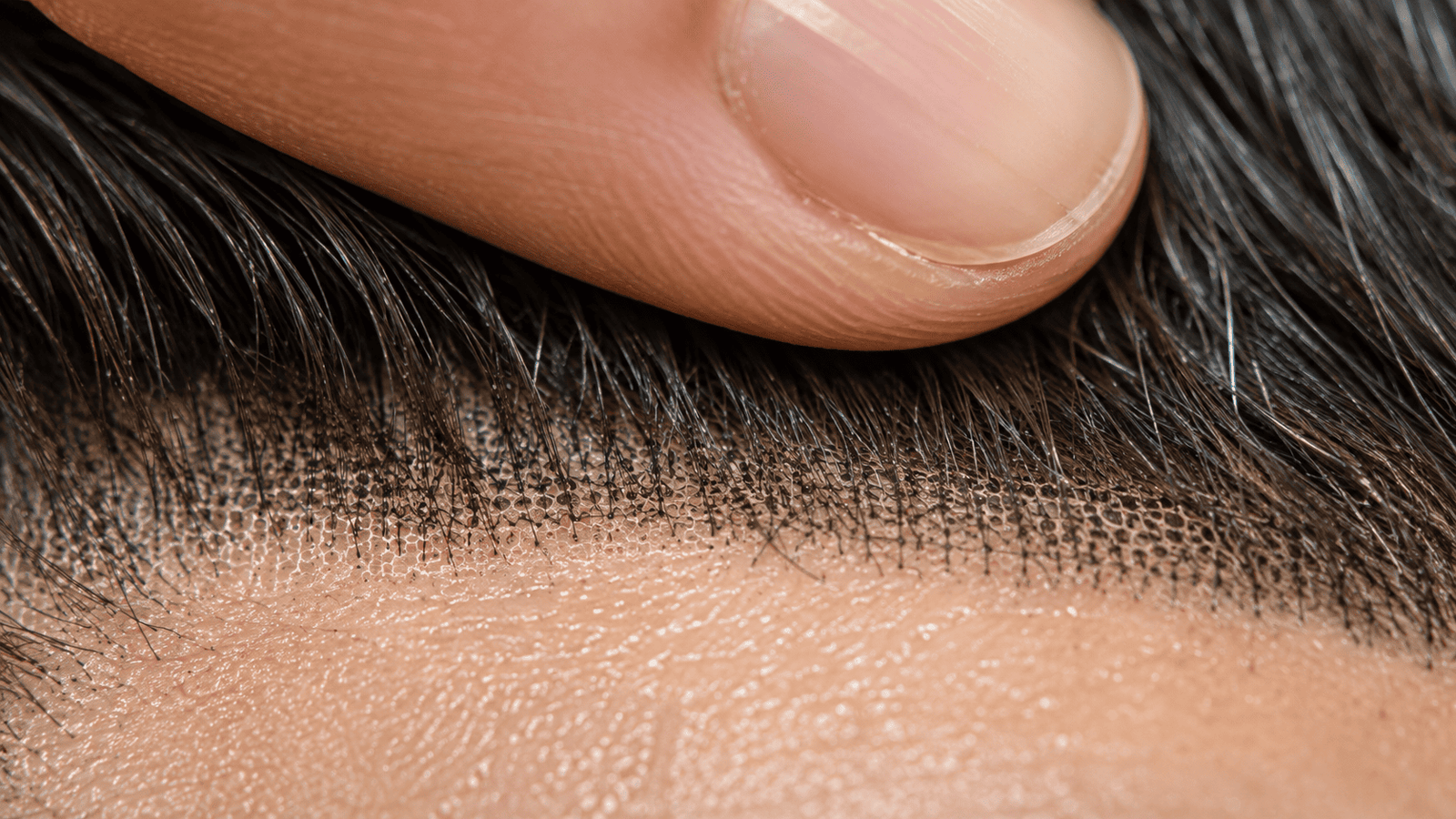
Modern taped hair systems, when professionally cut and blended, are essentially undetectable. Tapes allow the unit to sit exceptionally flush with the scalp. Precision lace hairlines create the flawless illusion of hair growing directly from the skin.
4. Flexible and Reversible Solution
Hair Taping is not a long-term medical commitment. It is 100% reversible. If a user decides they want to explore a different system, change their style, or return to natural thinning, the process is simple and completely safe. This flexibility is a significant advantage over permanent, static surgical results.
Key Considerations Before Choosing Hair Taping
While highly effective, Hair Taping requires specific maintenance and understanding.
1. Commitment to a Maintenance Cycle
This is not a “set-and-forget” procedure. A user must return for professional maintenance (removal, cleaning, re-taping, re-application) every few weeks. This is essential for scalp hygiene and maintaining a strong bond. Skipping maintenance can lead to a slipping unit and skin irritation.
2. Skin Sensitivity and Testing
While adhesive technology has advanced significantly, some individuals with extremely sensitive skin or pre-existing conditions like severe scalp dermatitis may not be good candidates. A small skin-test patch is often recommended in the consultation phase. Proper scalp care and the mandatory use of scalp protectors are crucial mitigation strategies.
3. Investment (Not a One-Time Cost)
Hair Taping involves both initial and ongoing costs. There is the price of the quality human hair system itself (which lasts several months). Then there is the cost of the regular maintenance sessions and adhesive supplies.
Hair Taping in Professional Clinics: The Standard for Success

The difference between a seamless, invisible taped hair system and a noticeable, problematic installation almost always comes down to professional expertise.
Non-surgical hair restoration clinics, such as the expert clinicians at Get Look Hair Fixing Clinic in Sector 18, Noida, provide a level of customization that DIY applications cannot match. These clinics operate like high-end wellness centers, offering completely private, one-on-one consultation and application suites to ensure total user discretion and relief.
They utilize advanced technologies (including digital scalp analysis seen during consultations) and employ technicians with over 12 years of specialized experience. A professional technician understands the nuances of choosing the correct tape strength (e.g., sensitive-skin silicone-based vs. max-hold acrylic), precision cutting the base for a perfect head shape, and the detailed blending artistry required for natural hair matching. This creates a high trust atmosphere where 97.2% client satisfaction is the standard.
Conclusion: Reclaiming Confidence Through Innovation
The impact of hair loss on self-image is significant. Hair Taping provides a dynamic, non-surgical pathway to regaining not just fullness, but the foundational feeling of personal confidence that accompanies it.
It stands as a testament to how advanced adhesive polymer science and refined cosmetic artistry can converge to provide sophisticated solutions for ancient concerns. Hair Taping is instant, reversible, safe, and—in the hands of true experts—completely invisible. It is not just about placing a patch; it is about providing individuals the security to enjoy an active, visible, and confident lifestyle. By eliminating the fears of surgery, the prolonged waits of topical options, and the invisibility of older methods, Hair Taping has secured its place as the premier, modern choice for non-surgical hair restoration.