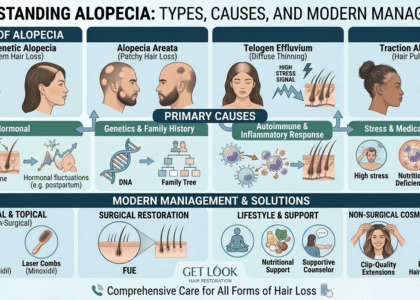

Alopecia traction, often called traction alopecia, is a form of hair loss caused by repeated, prolonged tension on the hair follicles. Unlike genetic forms of hair loss, traction alopecia is entirely preventable and often reversible in its early stages.
Understanding the mechanics of this condition is the key to protecting your natural hair and seeking the right restoration if thinning has already occurred.
The Mechanism of Tension | Alopecia Traction
Traction alopecia is typically the result of hairstyles that pull the hair tight, such as very tight ponytails, braids, cornrows, or heavy hair extensions worn for extended periods. This constant pulling creates inflammation in the follicle, which over time can weaken the hair and lead to permanent thinning, particularly around the hairline and temples.
Prevention is Key | Alopecia Traction
The most effective way to manage traction alopecia is to change the way you style your hair:
Loosen Up: Avoid hairstyles that cause pulling at the roots.
Rotate Styles: Do not wear the same tension-heavy hairstyle every day.
Gentle Extensions: If you use extensions, ensure they are lightweight and professionally applied to minimize stress on the hair.
Restoring Density | Alopecia Traction
If traction alopecia has already caused visible thinning, the hair follicles may need time to recover.
In the meantime, non-surgical hair restoration is a fantastic “stop-gap” measure. By using lightweight, non-tension hair patches or tape-in extensions, you can add volume to the thinning areas without further stressing the existing hair.
This allows you to maintain a full appearance while you focus on hair health and recovery.
FAQ's - Alopecia Traction
If caught early and the source of tension is removed, yes, the hair can often regrow. If the damage is long-term, restoration is the best aesthetic path.
Look for redness, itching, or bumps along the hairline, which indicate that your current hairstyle is causing excessive tension.
GET IN TOUCH
Any Queries? Contact Us Now.
Medical Disclaimer: This article is for informational purposes only and does not constitute medical advice. Always consult a qualified dermatologist or trichologist for diagnosis and treatment.