Alopecia is the medical term for hair loss, a condition that impacts millions of individuals globally. While often misunderstood as a simple cosmetic issue, alopecia is a complex clinical condition with various classifications, each requiring a tailored approach. Whether it presents as localized thinning or complete hair loss, the emotional impact is significant, making it vital to understand the condition and the modern restoration options available.
Classifying Alopecia
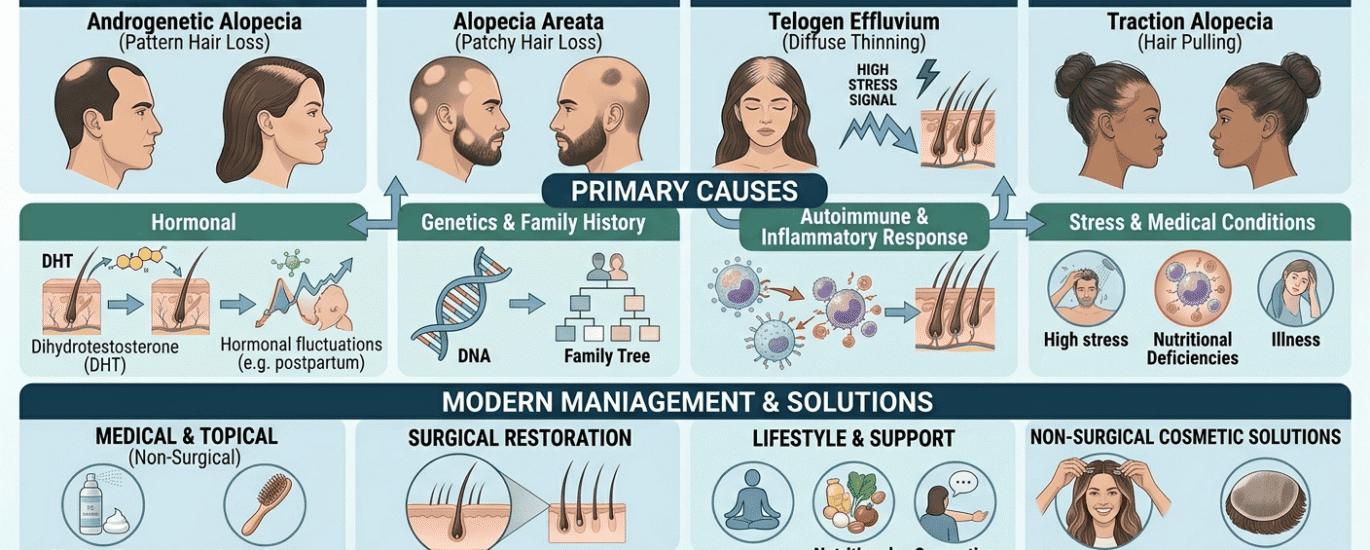
Alopecia is not a single diagnosis. It encompasses several distinct conditions:
Androgenetic Alopecia: Commonly known as pattern baldness, this is the most frequent form, driven by genetic sensitivity to androgens.
Alopecia Areata: An autoimmune condition where the immune system attacks hair follicles, leading to patchy hair loss.
Telogen Effluvium: A temporary shedding condition typically triggered by severe stress, illness, or hormonal shifts.
Cicatricial Alopecia: A rare group of inflammatory disorders that cause permanent scarring and follicle destruction.
Navigating the Management Path
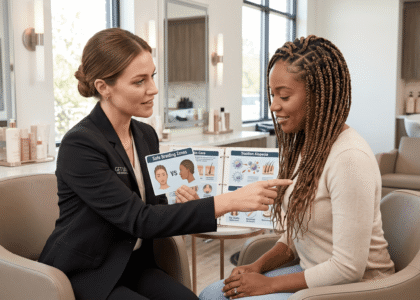
The journey of managing alopecia begins with an accurate diagnosis. A professional scalp assessment is essential to identify the specific type of alopecia you are facing, as this dictates whether medical or cosmetic intervention is most appropriate.
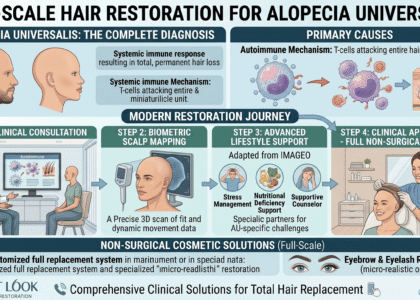
For many, the most effective strategy is a two-pronged approach: managing the underlying trigger (if possible) while utilizing high-end non-surgical hair systems to restore immediate visual density. Modern non-surgical hair restoration provides the freedom to maintain an active lifestyle and professional presence, effectively bypassing the uncertainty and long wait times associated with medical treatments for persistent alopecia.
FAQ's - What is Alopecia
No, alopecia is not contagious and cannot be passed from person to person.
Yes, non-surgical hair systems are a versatile and highly effective aesthetic solution regardless of the underlying type of alopecia.