Alopecia Scalp Care: Essential Steps for a Healthy Foundation
Alopecia and the Power of
Choosing between hair bonding vs hair weaving is a common dilemma for those new to non-surgical hair restoration. Both methods are highly effective and professionally trusted, but they cater to different lifestyle needs and hair types.
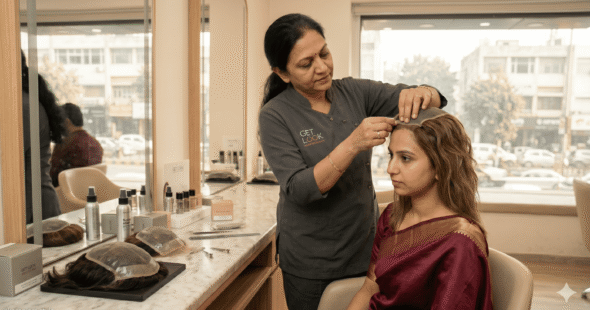
A hair patch for women is an investment in your confidence, style, and daily comfort. When you find a system that perfectly matches your color, density, and wave pattern, you want it to last as long as possible.
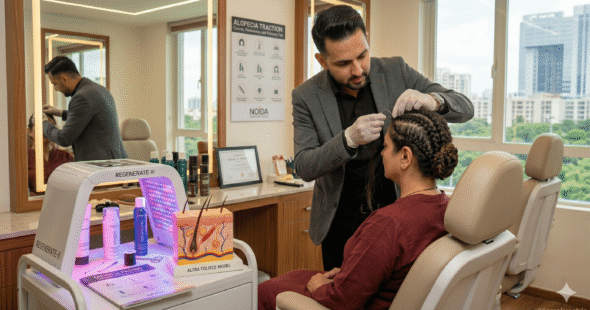
For those who prioritize absolute security and a “set-it-and-forget-it” experience, hair weaving stands out as one of the most reliable restoration methods. By utilizing a physical foundation made from your own hair, this technique provides a level of durability that is highly valued by active individuals and those who want a long-term solution for adding density to thinning areas.
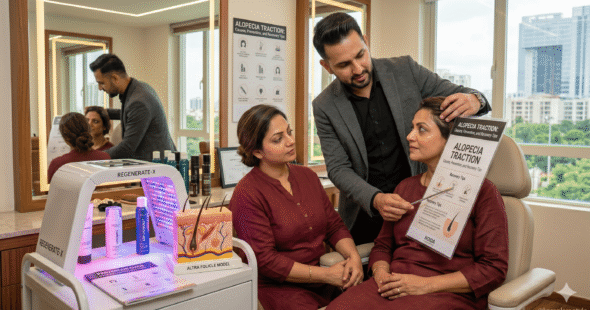
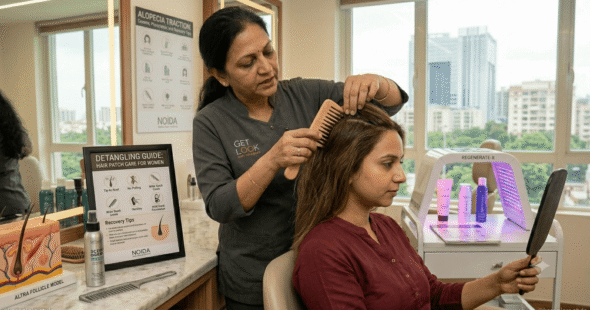
Tension hair loss prevention, commonly referred to as traction alopecia, is a condition resulting from the gradual pulling or tension placed on hair follicles over long periods. Unlike autoimmune forms of hair loss, this condition is purely mechanical, making it one of the few types of hair loss that is almost entirely preventable.
Restoring hair for someone with alopecia totalis requires a different technical approach than restoring a thinning crown. Because there is no existing hair to blend with, the base of the unit must be exceptionally soft and realistic.
The secret to lifestyle compatibility lies in the “lifestyle-first” design of modern hair systems. Not every hair patch is built for the same purpose. For our clients who frequent the gym, run, or live in the high-humidity climate of Noida, we prioritize specific base materials.