In the world of non-surgical hair bonding, the bond is everything. While high-quality adhesives provide the foundation for a secure fit, adhesive sealants are the “top coat” that protects that bond from the elements. If you want to maximize the time between your clinic visits and keep your hair system perfectly secure during your busiest weeks, understanding and using a professional-grade adhesive sealant is a game-changer.
An adhesive sealant is a professional-grade product applied after the hair system has been bonded to the scalp. It acts as a shield over the edge of the hair system’s base, where it meets the skin. The goal of the sealant is to “lock” the edge of the unit down, preventing dirt, oils, hair products, and sweat from working their way under the adhesive edge.
When the edge of the base remains sealed, the bond is protected from contamination. This simple, two-minute step can add significant longevity to your application. It prevents the edges from lifting—the most common reason people rush to the clinic for a premature “re-bonding” session—and maintains the invisibility of your front hairline.
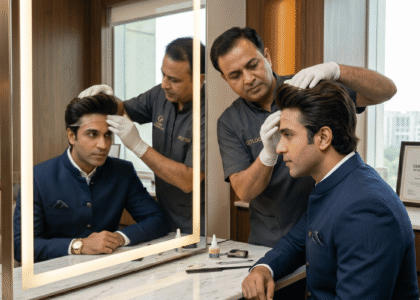
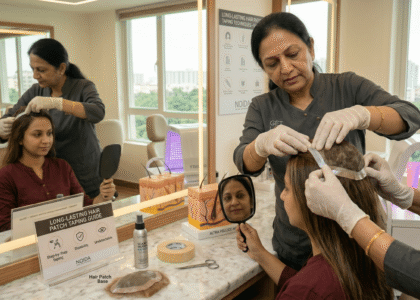
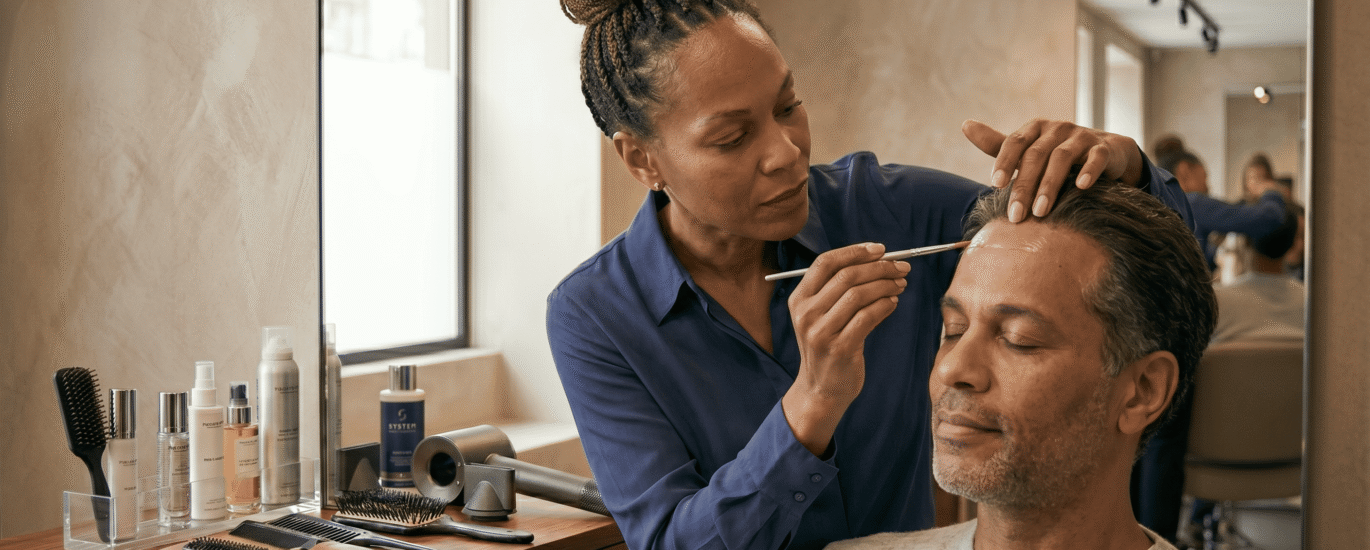
Applying a sealant is simple. A specialist applies a thin, even layer along the perimeter of the hair system using a brush or a specialized applicator. Once applied, it dries to an invisible, protective layer. Because the sealant itself is water-resistant, it adds an extra layer of defense against high humidity or intense sweat.
For clients who live in challenging environments, such as the hot and humid climate of Noida, the adhesive sealant is an essential part of the professional application process. It provides the peace of mind of knowing that your hairline will remain clean and secure until your next scheduled maintenance visit.
FAQ's: The Role of Adhesive Sealants
No, a professional sealant application during your clinic visit is usually sufficient, though some clients like to refresh it periodically if they are particularly active.
No. Professional-grade sealants are designed to be completely invisible upon drying, keeping your hairline perfectly natural.
Medical Disclaimer: This article is for informational purposes only and does not constitute medical advice. Always consult a qualified dermatologist or trichologist for diagnosis and treatment.