Your hair is a nutritional barometer. When the body is short of key nutrients, it diverts resources away from “non-essential” functions like hair growth first. Understanding which deficiencies matter — and which don’t — can save you a fortune on useless supplements.
Table of Contents
- Iron and Ferritin
- Vitamin D
- Zinc
- Protein
- Biotin: The Overhyped One
- How to Test Yourself?
Iron and Ferritin: The Most Common Correctable Cause - Nutritional Deficiencies Hair Loss
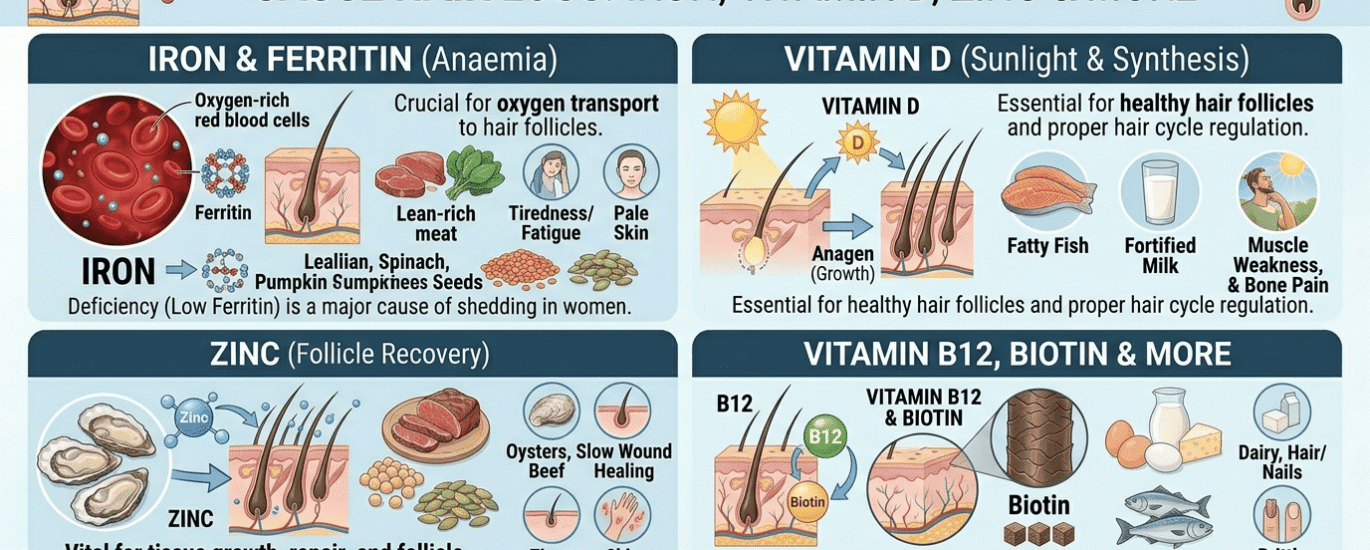
Iron deficiency is one of the most studied and correctable nutritional causes of hair loss, especially in premenopausal women. The key marker is not just hemoglobin (used to diagnose anemia) but serum ferritin — the body’s iron storage protein.
Multiple studies have found that ferritin levels below 30–40 ng/mL are associated with increased hair shedding and reduced hair density, even in people who are not technically anemic. Some trichologists recommend targeting ferritin above 70 ng/mL for optimal hair health.
Sources of dietary iron include red meat, dark leafy greens, lentils, tofu, and fortified cereals. Pairing iron-rich foods with vitamin C significantly improves absorption. Taking iron supplements with tea or coffee reduces it substantially — a mistake many people make without realizing.
Clinical Fact - Nutritional Deficiencies Hair Loss
A 2013 meta-analysis in the Journal of the American Academy of Dermatology found a significant association between low ferritin and hair loss in women, concluding that iron testing should be standard in the workup of female hair loss.
Vitamin D: Regulator of the Hair Cycle - Nutritional Deficiencies Hair Loss
Vitamin D receptors are present in hair follicle cells, and animal studies have shown that vitamin D plays a direct role in initiating the anagen (growth) phase of the hair cycle. Deficiency has been associated with both alopecia areata and telogen effluvium in human studies.
Deficiency is remarkably common — the World Health Organization estimates that over 1 billion people worldwide are vitamin D deficient or insufficient. In South Asia, including India, deficiency is particularly prevalent due to dietary patterns and reduced outdoor sun exposure in urban populations.
Optimal vitamin D levels for hair health appear to be 40–60 ng/mL (100–150 nmol/L). Standard supplementation with 2,000–4,000 IU of D3 daily is typically safe, but always confirm dosage with your doctor based on your serum level.
Zinc: The Underrated Hair Mineral - Nutritional Deficiencies Hair Loss
Zinc is essential for DNA synthesis, protein production, and sebaceous gland function — all critical to hair follicle health. Zinc deficiency causes hair thinning and a characteristic corkscrew or kinky texture change. It is more common in vegetarians, vegans, and people who drink heavily.
Crucially, excess zinc can also cause hair loss by interfering with copper metabolism. This is why zinc supplementation should only be taken if a deficiency is confirmed — not speculatively as many online guides suggest. Food sources include oysters (the richest source), beef, pumpkin seeds, and chickpeas.
Protein: The Building Block Hair Cannot Skip - Nutritional Deficiencies Hair Loss
Hair fibre is made of keratin — a structural protein. Without adequate dietary protein, the body cannot produce keratin efficiently and more follicles enter the telogen phase prematurely. Crash dieters, those following very low-calorie diets, and some vegans without careful planning are most at risk.
The minimum recommended protein intake for hair health is 1.2g per kilogram of body weight daily. For a 65kg woman, that’s about 78g of protein per day. Complete protein sources include eggs, meat, fish, dairy, soy, and quinoa.
Biotin: The Most Over-Sold Hair Supplement - Nutritional Deficiencies Hair Loss
Biotin (vitamin B7) has been heavily marketed as a hair loss cure. The reality? True biotin deficiency is extremely rare in people eating a varied diet — and supplementing with biotin when you are not deficient produces no hair benefit whatsoever.
What biotin supplements do cause, in high doses, is a dangerous interference with several common blood tests including thyroid panels and troponin (a cardiac marker), potentially producing false results. The FDA has specifically warned healthcare providers about this. Unless your doctor has confirmed biotin deficiency, skip this supplement entirely.
Seaweed and kelp supplements have also been linked to thyroid-related hair loss due to iodine overload. Just because something is natural does not make it safe for hair health.
How to Test for Nutritional Deficiencies Hair Loss?
A simple blood panel can reveal most nutritional causes of hair loss. Request these specific tests from your doctor: serum ferritin (not just hemoglobin), vitamin D (25-hydroxyvitamin D), zinc, full blood count, and if vegetarian/vegan, also vitamin B12. Add thyroid function (TSH, T4) at the same time — hypothyroidism mimics nutritional deficiency and is very common.
Test before supplementing. This avoids over-supplementing (which carries its own risks), allows you to track whether your levels improve, and ensures you are spending money on what you need.
- Iron Deficiency
- Vitamin D
- Zinc
- Protein & Hair
- Biotin Myth
FAQ's - Nutritional Deficiencies That Cause Hair Loss Guide
The timeline varies. It generally takes 3 to 6 months to see significant results after correcting a deficiency like Iron (Low Ferritin), as the hair growth cycle must reset, allowing new, strong hair to grow from the recovered follicles.
While specific volume comparisons aren't provided, the guide highlights Iron Deficiency (Low Ferritin) as a "major cause of shedding in women" because iron is crucial for oxygen transport to follicles. Vitamin D and Zinc deficiencies are also significant, impacting hair cycle regulation and preventing miniaturization, respectively.
It can if not be carefully balanced. The guide shows essential hair-supporting nutrients are found in animal products, such as Vitamin B12 (found in fish, dairy, eggs) and high-quality Iron/Ferritin (abundant in lean red meat). Vegans must rely on plant sources like spinach, lentils, and supplements to meet these requirements.
A supplement can be beneficial if you have a confirmed deficiency. For example, the guide suggests Vitamin B12 & Biotin support keratin production and nerve health, and Zinc prevents miniaturization. However, if your nutrient levels are already optimal, a general supplement might not provide extra benefit. Always target specific needs.
Yes. While Vitamin A is important for cellular health, consuming it in excess is a recognized trigger for hair loss. High doses (hypervitaminosis A) can over-stimulate hair follicles, causing them to reach the end of their growth phase prematurely and begin shedding.
Medical Disclaimer: This article is for informational purposes only and does not constitute medical advice. Always consult a qualified dermatologist or trichologist for diagnosis and treatment.