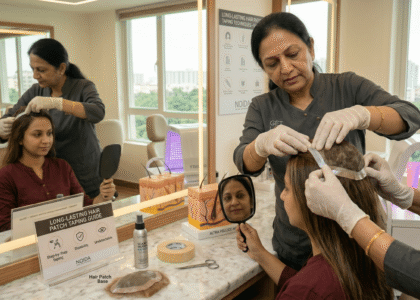
The base of your hair system is the foundation upon which your hair is knotted. Choosing the right hair system base material is a critical decision that influences how your hair looks, feels, and performs in your day-to-day life. At Get Look Hair Fixing Clinic, we guide you through the options, helping you match the right base to your personal priorities of comfort, durability, and aesthetics.
Comparing the Options | Hair System Base Material
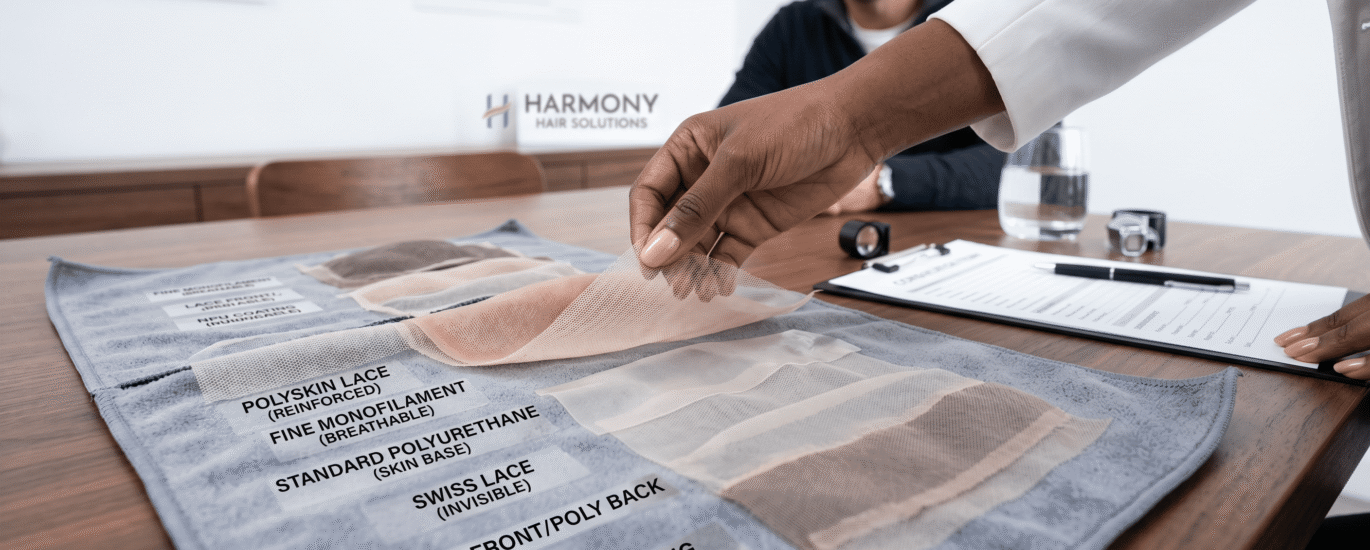
Lace Bases: Known for their incredible breathability, these are made from a fine mesh that allows the scalp to cool naturally. They are the ideal choice for those living in hot, humid climates like Noida.
Polyurethane (PU) Bases: These consist of a thin membrane that mimics the appearance of skin. They are extremely durable, very easy to clean, and offer a very secure “tite” hold for those who want a long-lasting bond.
Monofilament Bases: These provide a great balance of both worlds. They offer the durability of a solid structure with enough ventilation to remain comfortable for daily wear.
Matching the Base to Your Life | Hair System Base Material
If your priority is a flawless, undetectable front hairline, your specialist might steer you toward a fine lace or a delicate “skin” front. If your priority is a system that can be easily maintained and is highly resistant to tearing, a robust PU base might be your best match. By assessing your hair loss pattern and your activity level, our experts ensure that the system you choose provides the maximum benefit for your specific situation.
FAQ's - Choosing the Right Base Material
Lace bases are generally considered the most breathable and comfortable in hot, humid weather.
Yes, modern PU bases are engineered to be ultra-thin, making them look very similar to the natural appearance of the human scalp.
GET IN TOUCH
Any Queries? Contact Us Now.
Medical Disclaimer: This article is for informational purposes only and does not constitute medical advice. Always consult a qualified dermatologist or trichologist for diagnosis and treatment.