Hair loss, clinically known as alopecia, is a condition where hair shedding significantly exceeds the rate of new growth. It is a universal experience that affects millions of men and women across all demographics, often leading to deep emotional distress and a loss of self-confidence. While many view it merely as a cosmetic concern, hair loss is frequently the outward sign of internal changes, ranging from genetic predispositions and hormonal imbalances to nutritional deficiencies and high-stress lifestyles.
Understanding the Mechanisms of Thinning
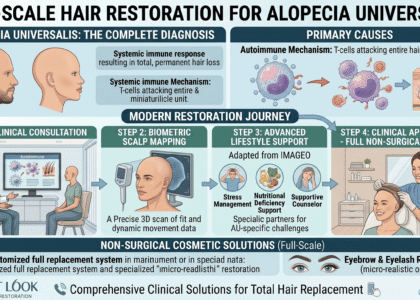
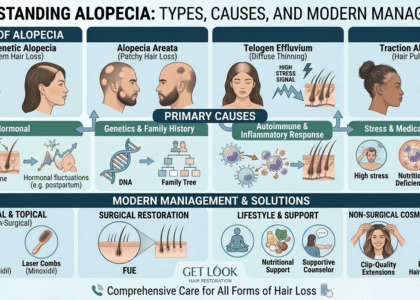
At its core, hair loss is often the result of follicle miniaturization—a process where hair follicles progressively shrink, producing thinner, shorter, and more fragile hair until they eventually cease production entirely. In urban environments, where environmental pollutants and high-pressure work cultures are prevalent, factors like androgenetic alopecia (pattern baldness) and telogen effluvium (stress-induced shedding) have become increasingly common.
For many, the first realization of hair loss comes during daily grooming—noticing more hair in the shower drain or a visible widening of the part. Recognizing these early signs is critical. While medical treatments like Minoxidil or Finasteride exist to potentially slow further loss, they are often slow to act and rarely reverse significant thinning. This gap between the desire for immediate results and the slow nature of biological treatments is exactly why the modern hair restoration industry has shifted its focus.
The Modern Paradigm Shift
We are living in an era where you do not need to wait months or years for results. Modern non-surgical hair restoration has reached a level of sophistication that was unimaginable even a decade ago. Technologies involving high-end human hair systems and precision bonding have transformed the experience of managing hairloss. Instead of masking the issue, these solutions provide immediate, natural-looking volume that integrates flawlessly with your existing hair.
The psychological impact of reclaiming one’s appearance cannot be overstated. When you look in the mirror and see a full, healthy head of hair, the boost to your social, professional, and personal confidence is instantaneous. By focusing on aesthetic restoration, individuals can successfully manage the visual symptoms of hair loss while continuing to focus on their overall health and stress management in the background.
FAQ's of Hair Loss
Genetics, hormonal changes (especially DHT sensitivity), chronic stress, poor nutrition, and certain medical conditions are the most common triggers
Not necessarily. Some forms, like telogen effluvium, are reversible once the underlying cause is managed. However, androgenetic alopecia usually requires intervention to maintain density